


Even successful orthodontic treatment doesn’t freeze your teeth in place forever. Two decades after braces, a combination of natural aging, bone changes, and retainer wear can all cause noticeable shifting — and understanding why helps Bakersfield patients decide what to do next.
When “Perfect” Braces Results Start to Change — and It’s Not Your Fault
Most people assume that if their teeth shift years after braces, something went wrong. The orthodontist made an error, or they didn’t wear their retainer long enough. That guilt is often misplaced.
There are actually two distinct processes at work, and confusing them leads to frustration.
Orthodontic relapse is when teeth return toward their original, pre-treatment positions. This is a genuine retention issue — and it’s the reason retainers exist.
Mesial drift is something else entirely. It’s the natural, lifelong tendency of all teeth to migrate slowly toward the front of the mouth as the jawbone narrows and the dental arch contracts with age. According to Healthline, teeth shift throughout life due to the changing shape of the jaw, pressures from eating and talking, and other factors — independent of whether you ever had braces at all.
At the 20-year mark, most people are experiencing a blend of both. Your braces were likely successful. What you’re seeing now is partly the biology of an aging jaw doing exactly what jaws do. The lower front teeth — the most common complaint — are especially vulnerable to crowding over time because the lower arch naturally narrows as the jawbone grows forward and inward with age.
This distinction matters because the solution differs. Relapse may require retreatment. Mesial drift may be managed with updated retention. A proper clinical evaluation — not a self-diagnosis — is the only way to know which is driving your specific situation. A teeth straightening consultation can help clarify exactly what’s changed and what options are available.
The Hidden Risk of a 20-Year-Old Fixed Retainer
Here’s something most “wear your retainer” articles skip entirely: a bonded wire retainer that has been in your mouth for two decades may not be protecting you. It may actually be working against you.
Fixed retainers are designed to be passive — meaning the wire sits quietly against your teeth without exerting any force. Over time, however, chewing forces, temperature changes, and normal wear can cause the composite bonding material to partially fail at one or two points. The wire doesn’t fall out. It just loses its grip on a single tooth.
When that happens, the wire — still attached to neighboring teeth — can become distorted. Instead of resting passively, it begins applying unintended pressure. Research published in PMC has documented cases where fixed mandibular retainers with partial bond failures caused significant unwanted tooth movement, including root torque and rotational shifts that required retreatment.
This is sometimes called “wire de-passivation,” and it’s one of the more underappreciated risks of long-term fixed retention. The retainer looks intact. Patients feel fine. But a localized bond failure can quietly push a single tooth out of alignment or contribute to gum recession over months or years.
If your bonded retainer is 15 to 20 years old, it warrants a careful professional inspection — not just a visual glance in the mirror. Scheduling cleanings and exams gives your dentist the opportunity to assess retainer integrity alongside your overall oral health. Bakersfield residents who got braces in their teens and still have the original wire in place are often surprised to learn their retainer needs attention.
How Hormonal Bone Changes Affect Orthodontic Stability in Midlife
The “20 years after braces” window overlaps heavily with a life stage that most orthodontic content ignores: the hormonal shifts of perimenopause and midlife bone remodeling.
Orthodontic results are only as stable as the bone supporting them. Teeth are held in place by the alveolar bone — a specialized bone that forms the tooth sockets. As WebMD notes, teeth continue to shift as we age, and bone density changes play a direct role in how easily teeth move under pressure.
During the perimenopausal years (roughly ages 35–55), declining estrogen levels reduce bone mineral density throughout the body — including in the jaw. Softer, more porous alveolar bone responds more readily to minor mechanical pressures: tongue thrust during sleep, clenching habits, even the consistent pressure of a sleeping position. Forces that wouldn’t have moved your teeth at 25 can gradually reposition them at 45.
This doesn’t mean tooth movement is inevitable or unmanageable. It does mean that the standard advice — “wear your retainer at night” — takes on new clinical importance during this life stage. It also means that patients in the Rosedale and Greenacres communities of Bakersfield who notice new crowding in their 40s should discuss their full health picture with their dentist, not just their orthodontic history. In some cases, aesthetic dentistry solutions can help restore the appearance and function of a smile that has changed over time.
Harvard Health reinforces this: retainers help maintain bite contact and protect against the cumulative forces that degrade tooth position over time — particularly after orthodontic treatment or significant restorative work.
What Orthodontic Longevity Actually Looks Like — and Your Realistic Options
Orthodontic treatment is not a permanent fix in the way a filling or implant might be. It’s more accurate to think of it as a repositioning that requires ongoing maintenance. A PubMed study on orthodontic treatment outcomes found that 20 years after treatment, only about 10% of patients maintained fully satisfactory alignment without any retention — a striking statistic that reframes expectations entirely.
The good news: the options available today are significantly better than what existed when many adults first had braces.
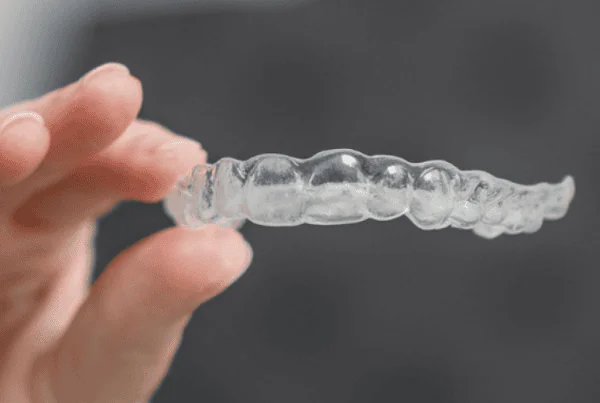
For mild shifting, updated removable retainers — clear, well-fitting, worn consistently at night — can stabilize the current position and prevent further movement.
For moderate relapse or mesial drift, Invisalign can address the crowding with far less disruption than traditional braces. Adults in the Calloway Drive area and across Bakersfield are increasingly choosing this route precisely because it fits around work and family life.
For significant relapse, a full orthodontic re-evaluation is the appropriate starting point. An orthodontist can distinguish between what’s cosmetic, what’s functional, and what genuinely requires retreatment.
What doesn’t work: ignoring it. Shifting teeth create uneven bite forces that accelerate wear on dental crowns, veneers, and natural enamel. They also create hard-to-clean gaps that increase periodontal risk over time.
Ready to Find Out Where Your Teeth Actually Stand?
If your teeth have shifted since braces — whether it’s been 10 years or 25 — the first step is a straightforward clinical evaluation. First Choice Dentistry serves patients throughout Bakersfield and the surrounding Central Valley, helping adults understand what’s changed, why it happened, and what realistic options look like for their specific situation. Schedule a dental exam and get a clear picture — not just reassurance.
This article is intended for general informational purposes only and does not constitute medical or dental advice. Always consult a qualified dental professional for diagnosis and personalized treatment recommendations.