


Professional teeth whitening is safe for most patients when supervised by a dentist, but temporary sensitivity and mild gum irritation are common side effects. Understanding why these reactions happen — and how to prevent them — makes the entire experience far less alarming. If you’re considering professional teeth whitening in Bakersfield, knowing what to expect before, during, and after treatment puts you in the best position for a comfortable result.
The “Zinger” Feeling Explained: What’s Actually Happening Inside Your Tooth
If you’ve ever felt a sudden electric-shock sensation during or after whitening, you’re not alone — and nothing is breaking inside your tooth. That sharp, fleeting jolt has a clinical name and a clear biological explanation.
Research published in PMC describes what’s known as the hydrodynamic theory of tooth sensitivity: whitening agents change the fluid pressure inside the microscopic tubes (dentinal tubules) that run from your enamel toward the nerve. When hydrogen peroxide diffuses through enamel, it alters the movement of fluid in those tubules. Rapid fluid shifts trigger mechanoreceptors deep in the pulp — and that’s the “zinger.” It’s a pressure event, not acid burning a nerve.
This distinction matters. Knowing the sensation is caused by fluid dynamics rather than structural damage gives patients realistic expectations and significantly reduces anxiety. The intensity of zingers is also tied to peroxide concentration: in-office treatments using 25–40% hydrogen peroxide produce faster results but carry a higher short-term sensitivity risk than lower-concentration at-home gels.
So, is the sensitivity permanent? For the overwhelming majority of patients, no. According to Healthline, sensitivity from whitening is typically mild to moderate and resolves on its own. Clinical evidence supports this — one study found that by week two of home whitening treatment, no patients reported severe sensitivity, and by week four, moderate sensitivity had cleared entirely.
Patients with gingival recession are more likely to experience sensitivity because exposed root surfaces lack the protective enamel layer, giving peroxide a shorter path to the nerve. If that describes you, mention it before your appointment.
The 2-Week Pre-Whitening Prep That Most Patients Skip (But Shouldn’t)
Most sensitivity-management advice focuses on what to do after whitening hurts. A smarter approach targets prevention before treatment begins — specifically, the two weeks prior to your appointment.
Here’s the science: sensitivity is largely driven by peroxide reaching the pulp through open dentinal tubules. If those tubules are partially occluded before whitening starts, the peroxide penetrates less deeply, and the nerve response is milder.
The protocol is straightforward:
- Switch to a potassium nitrate toothpaste (such as Sensodyne) or a hydroxyapatite-based toothpaste for 14 days before treatment
- Potassium nitrate chemically calms nerve-ending excitability; hydroxyapatite physically deposits mineral into tubule openings
- Brush twice daily as normal — no special technique required
This pre-conditioning approach is especially relevant for patients in the Seven Oaks and Stockdale areas of SW Bakersfield, where many people are exploring professional whitening for the first time and aren’t aware that preparation affects outcome. Health.Harvard.edu notes that bleaching is particularly uncomfortable for people with sensitive teeth or gum recession — pre-treatment preparation directly addresses both risk factors.
Two weeks is the window because hydroxyapatite remineralization and potassium nitrate nerve desensitization both require repeated exposure to become effective. Starting the night before your appointment won’t produce the same result.
What Whitening Does to Your Enamel — and the White Spot Scare
One of the most common post-whitening panics involves chalky white spots or patches appearing on teeth immediately after treatment. Patients often assume the bleach “ate” their enamel. In almost every case, that’s not what happened.
Professional whitening temporarily draws moisture out of the enamel — a process called dehydration. This creates microscopic air pockets just beneath the surface, which scatter light differently than hydrated enamel and appear as opaque white areas. These spots are not enamel loss. They’re a rehydration event, and they resolve within 24–48 hours as the tooth re-absorbs saliva and ambient moisture.
This is meaningfully different from true enamel damage. The ADA’s whitening overview distinguishes between the temporary optical effects of bleaching and actual structural changes, noting that peroxide-based treatments are well-established in professional dentistry. True enamel erosion from whitening is associated with overuse of high-concentration products without supervision — not a single professionally administered session.
That said, the concern about enamel is worth taking seriously over the long term. ADA News reporting on frequent whitening risks notes that continuous, unsupervised use of OTC strips and gels can make enamel more permeable and expose underlying dentin — which is naturally yellow. This is why professional guidance matters: a dentist evaluates your enamel thickness, existing restorations, and stain type before recommending a protocol. Patients near Stockdale Country Club or Brighton who want noticeably whiter teeth without compromising enamel health are best served by a supervised plan rather than stacking store-bought strips.
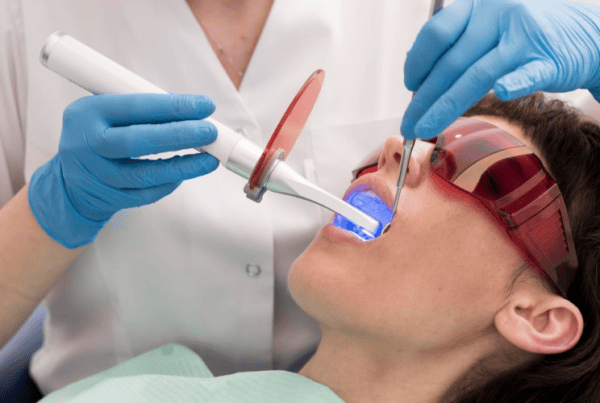
On gum sensitivity: hydrogen peroxide at higher concentrations can irritate soft tissue if it contacts the gums. In-office treatments use protective barriers — either a rubber dam or a neutralizing gel — applied before the bleaching agent. At-home trays dispensed by a dentist are custom-fitted to minimize gel overflow onto gingival tissue. Ill-fitting OTC trays are the most common cause of gum irritation because the gel spreads beyond the teeth.
Making Whitening Last: What to Do After Your Treatment
Results from professional whitening typically last one to three years with appropriate care — but the first 48 hours post-treatment are the most critical window.
Immediately after whitening, enamel pores are temporarily more open and the tooth surface is more susceptible to restaining. During this window:
- Avoid coffee, tea, red wine, and dark sauces
- Use a straw for any pigmented beverages
- Hold off on tobacco use
- Rinse with water after meals
Beyond the immediate window, maintaining results in Bakersfield’s active lifestyle means building habits around the staining triggers that are hardest to eliminate entirely. Regular dental cleanings and exams remove surface chromogens before they integrate deeply into enamel. Touch-up treatments once or twice per year — rather than continuous OTC product use — protect enamel while keeping shade consistent.
If you have tooth-colored fillings, crowns, or veneers, note that whitening agents only affect natural tooth enamel. Existing restorations won’t lighten, which can create shade mismatches after treatment. Your dentist should evaluate this before any whitening begins. If a crown or restoration does need to be replaced to match your new shade, a tooth crown consultation can help you understand your options. Similarly, patients interested in addressing both color and shape may want to explore dental veneers as a complementary or alternative solution. For those also considering alignment alongside whitening, teeth straightening options are worth discussing with your dentist as part of a comprehensive smile plan.
Ready for Whiter Teeth in Bakersfield? Start With a Consultation
Sensitivity fears and enamel concerns are the two most common reasons people delay whitening — and both are manageable with the right professional guidance. First Choice Dentistry serves patients across Bakersfield, including families and individuals throughout the Seven Oaks and Stockdale communities, with personalized whitening consultations that assess your stain type, enamel health, and sensitivity risk before any treatment begins. Our aesthetic dentistry services are designed to help you achieve your smile goals safely and effectively. Book your consultation today and get a plan built around your teeth — not a one-size-fits-all kit.
Medical disclaimer: This article is intended for general informational purposes only and does not constitute professional dental or medical advice. Always consult a licensed dental professional before beginning any teeth whitening treatment, particularly if you have existing dental restorations, gum recession, or a history of tooth sensitivity.