
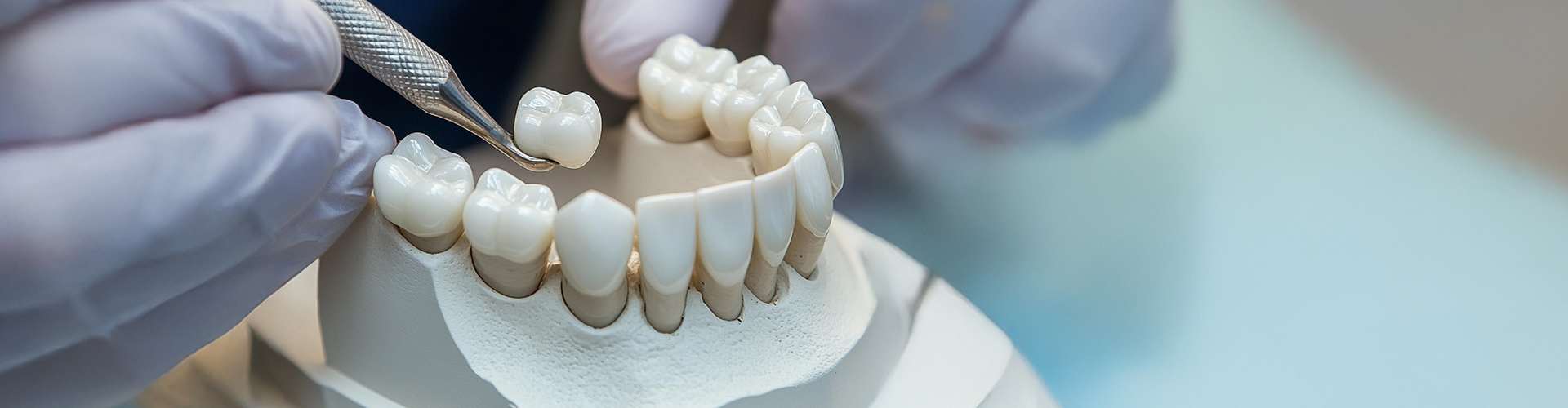

Dental crowns are often thought of as simple tooth “caps,” but that barely scratches the surface of what they can do. These small but mighty restorations are one of the most versatile tools in modern dentistry. They can protect damaged teeth, restore strength and function, improve aesthetics, and support other treatments. Whether your tooth is cracked, discolored, worn down, or part of a more complex dental procedure, crowns often play a key role in bringing your smile back to full health and beauty.
At First Choice Dentistry, we use dental crowns in many ways to give patients durable, natural-looking solutions that stand the test of time. Here’s a closer look at why crowns are so widely used and what they can do for your smile.
What dental problems can crowns fix?
Crowns are incredibly adaptable, making them a go-to solution for a wide range of dental concerns. Their strength, shape, and natural appearance allow dentists to address problems that fillings or bonding alone may not handle effectively.
1. Protecting weakened teeth
When a tooth is structurally compromised, such as after a large filling, deep decay, or a root canal, it becomes more vulnerable to cracks and breakage. A dental crown acts like a protective shield, fully encasing the tooth to prevent further damage. This is especially important for molars, which bear the brunt of chewing forces.
For example, if a tooth has been treated for a root canal, it may be intact but hollowed out from the inside. A crown gives it the strength it needs to function like a normal tooth again. Without that reinforcement, there’s a high risk the tooth could fracture later on.
2. Restoring broken or severely worn teeth
Sometimes a tooth is chipped, cracked, or ground down so much that it cannot be rebuilt with a filling alone. Crowns can restore the entire shape, size, and functionality of these teeth. Whether the damage came from an injury, years of grinding, or gradual wear, a crown allows the tooth to work properly again and prevents further deterioration.
3. Covering teeth with large fillings
When a filling takes up more than half of a tooth, the remaining structure can be fragile. Placing a crown over such a tooth provides long-term stability. It distributes biting forces evenly, reducing the risk of the tooth breaking under pressure.
4. Holding dental bridges in place
Dental crowns are often used as anchor points for dental bridges. A bridge fills the gap left by a missing tooth, and the crowns are placed on the neighboring teeth to support it. This is a reliable and time-tested way to restore function and aesthetics after tooth loss.
5. Protecting dental implants
Crowns are also the finishing touch on dental implants. Once an implant is surgically placed and integrated into the jawbone, a custom crown is attached to act as the visible, functional tooth. The crown is what allows you to chew, smile, and speak normally again.
6. Addressing cosmetic imperfections
Although crowns are often thought of for restorative needs, they also work wonders in cosmetic dentistry. They can cover teeth that are deeply discolored, misshapen, or poorly aligned. Unlike veneers, crowns cover the entire tooth, making them a stronger choice in some cosmetic cases.
When do dentists recommend getting a crown?
Dentists don’t recommend crowns lightly. They usually suggest this treatment when it’s the most effective way to save or strengthen a tooth. Here are some common scenarios where a crown becomes the best solution.
1. After root canal therapy
A root canal removes the infected pulp from a tooth, but it also leaves the tooth weaker and more brittle. To keep it functional for years to come, most dentists recommend placing a crown soon after the root canal is complete. It protects the tooth from future fractures and restores its full chewing ability.
2. Severe decay that can’t be fixed with a filling
If decay has affected a large portion of a tooth, a filling might not provide enough support. A crown can cover the entire tooth structure, sealing out bacteria and restoring stability. It’s a more durable solution that helps prevent future problems.
3. Cracked or fractured teeth
A small crack can sometimes be repaired with bonding, but larger fractures often require a crown. Without one, the tooth might continue to crack until it needs extraction. Crowning the tooth early can prevent a more serious situation later.
4. Worn down teeth due to grinding or acid erosion
Teeth that have been shortened or flattened over time can affect how your upper and lower jaws meet. Crowns can restore the correct shape and bite, protecting against jaw discomfort and uneven wear on other teeth.
5. Completing a dental implant
Crowns are an essential part of implant treatment. Once the titanium post is placed and heals, a crown is attached on top to create a fully functional tooth replacement. This combination is one of the most durable and natural-looking tooth replacement options available today.
6. As part of a dental bridge
If you’re missing a tooth and a bridge is chosen as the replacement method, crowns are placed on the teeth next to the gap to hold the bridge in place. This is often recommended when the adjacent teeth already need crowns or large restorations.
Can dental crowns be used for cosmetic purposes too?
Yes, absolutely. While crowns are often placed to address functional concerns, they also offer significant cosmetic benefits. In some cases, crowns can deliver better results than veneers or bonding, especially when there are structural issues along with aesthetic concerns.
1. Covering severely discolored teeth
Teeth that are deeply stained due to trauma, medication, or internal discoloration may not respond to whitening treatments. A crown can completely mask the discoloration and match the shade of surrounding teeth, creating a seamless smile.
2. Reshaping misshapen or uneven teeth
Crowns can be used to correct the shape of teeth that are too small, uneven, or irregular. This can make the entire smile look more balanced and harmonious. For example, if a tooth is much shorter than the others, a crown can bring it in line with the rest.
3. Enhancing the results of orthodontic or restorative work
Sometimes, even after orthodontic treatment, a tooth might need reshaping to achieve the desired aesthetic. Crowns can fine-tune these details, ensuring the final result looks natural and polished.
4. Creating a uniform, attractive smile
In smile makeovers, crowns may be used strategically on several teeth to improve both appearance and strength. This approach can transform a smile that has a mix of chips, discoloration, and shape inconsistencies into one that looks healthy and even.
Materials and Modern Advancements in Dental Crowns
Crowns have come a long way from the bulky metal caps of the past. Today, patients can choose from a variety of materials, each with distinct benefits:
- Porcelain and ceramic: These provide the most natural appearance and are often used for front teeth.
- Porcelain fused to metal: This combines strength and aesthetics, though it can sometimes show a thin dark line at the gumline over time.
- Zirconia: Known for its strength and durability, zirconia crowns are ideal for molars or patients who grind their teeth.
- Gold or metal alloys: Less commonly used for visible teeth today but still valued for their exceptional durability, particularly on back teeth.
Modern digital scanning and milling technology allows crowns to be made with remarkable precision. Some practices even offer same-day crowns using CAD/CAM technology, eliminating the need for temporary crowns and multiple appointments.
Crowns as a Long-Term Investment in Your Smile
A dental crown isn’t just a quick fix. It’s a durable, long-term solution designed to restore function, protect against future problems, and improve the look of your teeth. Whether used for restorative or cosmetic purposes, crowns often play a crucial role in preserving your natural teeth and maintaining a confident smile.
If you’ve been told you may need a crown, or you suspect a tooth is too damaged for a simple filling, don’t wait until the problem gets worse. The earlier a crown is placed, the better the long-term outcome tends to be.
Schedule Your Appointment with First Choice Dentistry
At First Choice Dentistry, we take a personalized approach to every crown we place. From selecting the right material to ensuring a perfect fit and natural appearance, our team is dedicated to giving you results that last. If you think you might need a crown or want to explore cosmetic options, we’re here to help.