

Permanent and removable retainers each have real advantages — but the choice depends on your bite, your compliance history, and risks most patients never hear about. This guide covers the clinical reasons orthodontists sometimes avoid fixed wires, how the two types compare on comfort, and what Bakersfield patients should ask before committing. If you’re also exploring teeth straightening options before reaching the retention phase, understanding retainers early can help you plan ahead.
The Hidden Risk With Fixed Retainers Most Patients Never Hear About
Orthodontists often hesitate to recommend permanent retainers for a reason that goes well beyond “they’re hard to floss.” The real concern is something called wire activation — and it’s more serious than a loose bracket.
A braided multi-strand wire is designed to sit passively against your teeth, holding position without applying force. But when you bite down hard on something — think almonds, ice, or a crusty sourdough roll — the wire can deform slightly. When that happens, it stops being a passive holder and starts behaving like an active orthodontic appliance, silently torquing your tooth roots outward through the surrounding bone.
The unsettling part? You won’t feel it happening. Unlike braces tightening — which creates obvious, uniform pressure — an activated retainer wire produces slow, localized stress. The first visible signs are often sudden gum recession around a single tooth or unexplained root tipping on an X-ray. By the time those symptoms appear, structural damage may already exist.
This is why a WebMD overview of permanent retainers notes that dentists may remove fixed retainers when they cause gum irritation or excessive plaque buildup — but wire deformation is a subtler, less-discussed reason for removal. A broken bond (where the wire detaches from one tooth) is an obvious, fixable problem. An activated wire looks intact but is doing real harm underneath the surface.
If you have a fixed retainer and notice localized gum recession near a single front tooth — especially on the lower arch — that warrants an immediate evaluation, not a “wait and see.” Scheduling cleanings and exams regularly is one of the best ways to catch these issues before they become serious.
Why Your Top Teeth Are a Different Story
Patients near Fox Run and across Bakersfield frequently ask: “If I have a permanent retainer on the bottom, why can’t I have one on top?”
The biomechanics tell a clear story. During normal chewing, your lower incisal edges make direct contact with the lingual (tongue-side) surfaces of your upper front teeth. That repeated shearing force targets exactly the composite pads bonding a fixed retainer to your upper arch. In patients with a Class II bite (upper teeth significantly forward of lower) or a deep bite (upper teeth heavily overlapping lower), those forces are amplified dramatically. The result is a near-certain debond rate for upper permanent retainers in most real-world bite situations.
Lower permanent retainers avoid this problem because the bonding surface on lower canines is stable and sheltered from direct occlusal loading. According to Healthline’s overview of permanent retainer types, orthodontists use removable retainers on upper teeth and fixed retainers on lower teeth far more often — and the biomechanical mismatch is the core reason why.
So the practical answer is: upper permanent retainers aren’t impossible, but they require confirmed anterior clearance. Without that, they fail quickly and repeatedly.
Fixed vs. Removable: How They Actually Compare
Setting aside the clinical edge cases, both retainer types have genuine strengths worth understanding.
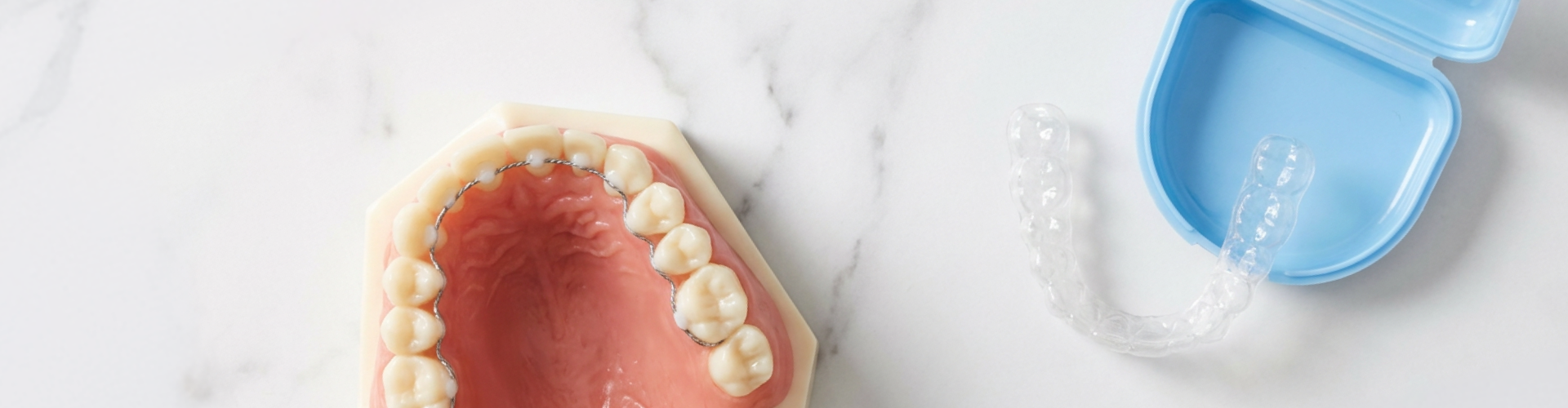
Permanent retainers win on compliance. They’re always working, can’t be lost, and as Healthline’s retainer comparison notes, have little to no effect on speech. For patients who struggled to wear their removable retainers consistently during orthodontic treatment, a fixed wire is often the more reliable long-term choice.
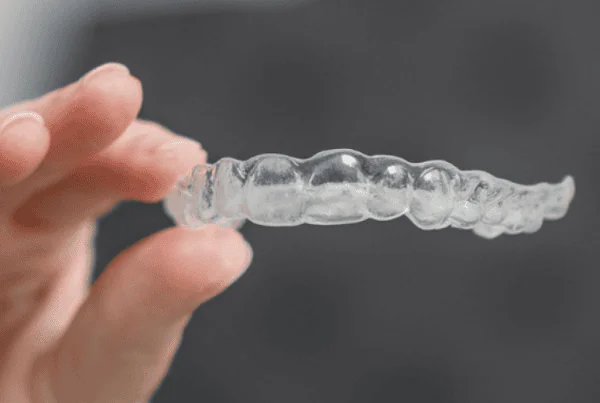
Removable retainers — Hawley, Essix, or clear plastic styles — allow normal brushing and flossing and are easier to keep clean. The tradeoff is discipline. Miss a week or two, and re-seating a tight Essix tray becomes genuinely painful.
That pain is different from anything you felt during braces. Archwire pressure during orthodontic treatment is continuous and uniform — your periodontal ligament adapts over days. Re-inserting a rigid plastic retainer over even slightly relapsed teeth creates acute ischemic compression of the periodontal ligament in a matter of seconds. It’s sharp, localized, and a warning sign. If forcing a retainer back onto your teeth causes that level of pain, the tray may be actively driving root resorption rather than gentle realignment — and you need a professional evaluation before continuing to wear it. In some cases, patients who experience significant relapse may also need to explore Invisalign to re-correct their alignment before a new retainer can be properly fitted.
Research published via the NCBI confirms that the retention phase is critical to preventing teeth from returning to their original position. Skipping even short periods creates the exact relapse scenario that makes re-seating so painful.
In many cases, WebMD’s dental health guidance points out that orthodontists use a combination of both types for the best long-term results — a fixed wire on the lower arch and a removable retainer on top.
Braces vs. Retainers: Which Hurts More?
Most patients expect braces to be the painful part — and for initial placement and tightening appointments, that’s fair. The soreness from archwire adjustments typically peaks within 24–72 hours and resolves as the periodontal ligament adapts to the new tension. It’s predictable and manageable.
Retainers are generally far more comfortable during normal wear. A well-fitted permanent retainer causes minimal sensation. A properly worn removable retainer may feel snug but shouldn’t cause real pain.
The exception is the re-seating scenario described above. That acute pain profile — from forcing a rigid tray over relapsed teeth — can actually exceed the discomfort of a typical braces adjustment because it’s concentrated rather than distributed. Healthline’s braces removal guide notes that retainers are prescribed immediately after braces removal specifically to prevent this kind of relapse from occurring. If a dental emergency arises from a broken or improperly fitting retainer, seeking dental emergency care promptly can prevent further complications.
The takeaway: wear your retainer consistently and the pain comparison is easy — retainers win. Let relapse happen and the comparison flips quickly.
Ready to Talk Retainers in Bakersfield?
If you’re finishing orthodontic treatment or questioning whether your current retainer is still working correctly, the team at First Choice Dentistry is here to help. Serving patients throughout Bakersfield and the Fairway Oaks community, we offer a full range of services — including aesthetic dentistry for patients looking to enhance their smile alongside their orthodontic results. We can evaluate your current retention situation and help you choose the approach that protects your results long term. Reach out today to schedule a consultation.
Medical disclaimer: This article is intended for general informational purposes only and does not constitute professional dental or medical advice. Always consult a qualified dental provider for diagnosis and personalized treatment recommendations.