

A routine dental cleaning and exam involves several distinct clinical steps that go far beyond polishing your teeth. Knowing what each step does — and what a rushed appointment looks like — helps you get the most from every visit. Here’s what to expect at your next cleanings and exams appointment in Bakersfield.
Is Your Cleaning Being Rushed? How to Tell in 4 Steps
Most cleanings run 45 to 60 minutes. But patients in Bakersfield — and everywhere — sometimes walk out in 15 minutes wondering if anything actually happened. Sometimes a short appointment is fine. Other times, it’s a red flag.
A 15-minute cleaning can be entirely appropriate if you have excellent home hygiene, zero calculus buildup, and you’ve been coming in every six months without gaps. In that case, there’s simply less work to do. According to Healthline, the whole cleaning process usually takes less than an hour — but the actual active scaling time varies significantly based on your individual buildup.
The concern arises when a short appointment skips essential clinical steps entirely. Use this four-point audit after any quick visit:
- Did they probe your gums? Periodontal probing — measuring the pocket depth between your teeth and gums — is non-negotiable. If a hygienist skipped it, the appointment was incomplete.
- Did they scale below the gumline? Polishing only the visible tooth surfaces removes stain, not tartar. Real scaling reaches subgingival deposits.
- Did the dentist examine you personally? A hygienist can clean, but a dentist must examine. If you never saw the dentist, that’s a problem.
- Did anyone check your neck and jaw? More on this below — but if no one palpated your lymph nodes or jaw joints, you missed a critical screening.
A longer appointment after a gap in care is also completely normal. Tartar accumulates, and removing it properly takes time. WebMD notes that you’ll typically spend longer in the chair if it’s been a while since your last visit.
What the Dentist’s Hands Are Actually Doing to Your Neck and Jaw
Patients near Kern River Parkway Trail and throughout Bakersfield often tense up when a dentist begins pressing silently along their jaw, under their chin, and down the sides of their neck. It feels odd. Nobody explains it. Here’s what’s actually happening.
This is the extraoral and head-and-neck examination — one of the most clinically important parts of your entire visit.
Submandibular glands: The dentist palpates under your chin to feel the salivary glands for swelling or tenderness, which can indicate infection or obstruction.
Cervical lymph nodes: Pressing gently along both sides of your neck checks for enlarged, firm, or asymmetrical lymph nodes. Healthy nodes are small and soft. Hard, fixed, or asymmetrical nodes can indicate oral cancer, lymphoma, or other systemic disease. This is a genuine early-detection screen — not a formality.
Temporomandibular joint (TMJ): The dentist places fingers just in front of your ears while asking you to open and close. They’re listening and feeling for crepitus (grinding or clicking), deviation of the jaw, or restricted range of motion — early signs of TMJ disorder.
Oral mucosa: Every surface inside your mouth — cheeks, tongue, soft palate, throat — gets visually and physically checked for sores, lesions, or discoloration that won’t heal. The NIDCR explains that a comprehensive oral exam can detect early indications of systemic diseases including diabetes, HIV, and Sjögren’s syndrome.
This screening takes under five minutes. Its value is enormous. Don’t skip appointments thinking you can skip it. If you experience sudden tooth pain or swelling between visits, our dental emergency services are available to help.
The Full Cleaning Sequence — Step by Step
Once the preliminary exam wraps up, the hygienist moves through a predictable sequence. Understanding each step removes the anxiety that comes from unexpected sounds and sensations.
Physical mouth assessment: The hygienist uses a small mirror to survey your teeth and gums before touching anything. Signs of gingivitis or unusual changes get flagged before cleaning begins.
Scaling: A scaler — hand instrument or ultrasonic — removes plaque and calculus from tooth surfaces and below the gumline. The scraping sound is normal. More buildup means more time. A Healthline overview explains that once plaque hardens into tartar, only a dental professional can remove it — no amount of home brushing will do it.
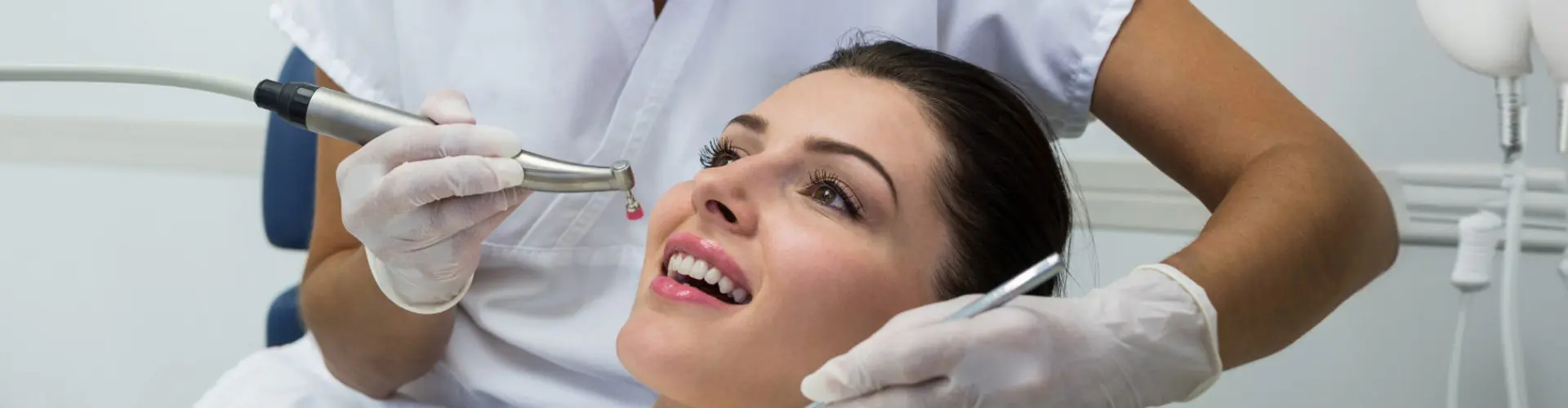
Polishing: A high-powered electric brush with gritty prophylaxis paste smooths and polishes enamel surfaces. You often get a flavor choice. This step removes residual plaque and surface stains. Patients interested in taking their results further may also want to explore professional teeth whitening to brighten their smile after a cleaning.
Expert flossing: Even regular home flossers benefit here. The hygienist reaches areas most patients miss and identifies bleeding spots that indicate gum inflammation.
Fluoride treatment: A gel or varnish applied to teeth for approximately one minute provides a protective barrier against cavities. According to Harvard Health, most people should see their dentist at least twice yearly for cleanings — and fluoride reinforces the protection between visits.
Dentist exam: X-rays (typically annual), cavity checks, bite assessment, and review of any concerns complete the appointment. If a cavity is found, your dentist may recommend a tooth crown to restore a damaged tooth.
How to Prepare — Including a 14-Day Sensitivity Protocol
Generic prep advice tells you to brush before you arrive. That’s fine, but it does nothing for patients with sensitive teeth who dread the scraping sensation of scaling.
Here’s a more useful approach, especially if sensitivity has kept you away:
14 days before: Switch to a toothpaste containing potassium nitrate (common in sensitivity formulas). Used twice daily, it gradually blocks exposed dentin tubules and builds a protective barrier. This meaningfully reduces nerve pain during scaling — but it takes time to work, which is why starting two weeks out matters.
The morning of: Avoid cold beverages for at least four hours before your appointment. Cold liquids temporarily increase dentin sensitivity.
One hour before: Consider taking an over-the-counter NSAID like ibuprofen (if appropriate for your health history). NSAIDs block prostaglandin synthesis before physical scaling begins, reducing inflammatory pain response during the procedure. Always check with your physician if you have contraindications.
At the appointment: Tell your hygienist about your sensitivity upfront. A topical numbing agent can be applied to teeth and gums before scaling starts. You are always entitled to rest breaks.
Between visits: The ADA’s home care guidance recommends designing a consistent home care regimen — brushing, flossing, and appropriate products — tailored to your individual risk level. Less buildup at your next visit means a shorter, less uncomfortable cleaning.
Routine dental attendance is genuinely associated with better long-term oral health outcomes. The longer you maintain regular visits, the stronger that protective effect becomes. This applies to the whole family — our children’s dentistry services help young patients build healthy habits from an early age.
Schedule Your Cleaning in Bakersfield
Whether you’re near Laurelglen, the River Walk, or anywhere across the Central Valley, First Choice Dentistry is ready to walk you through a thorough, unhurried cleaning and exam. Our Bakersfield team takes the time to complete every step — probing, scaling, the full extraoral exam, and the conversation about what we found. Book your appointment today and come in knowing exactly what to expect.
Medical disclaimer: This article is for informational purposes only and does not constitute medical or dental advice. Always consult a qualified dental professional for guidance specific to your oral health needs.