
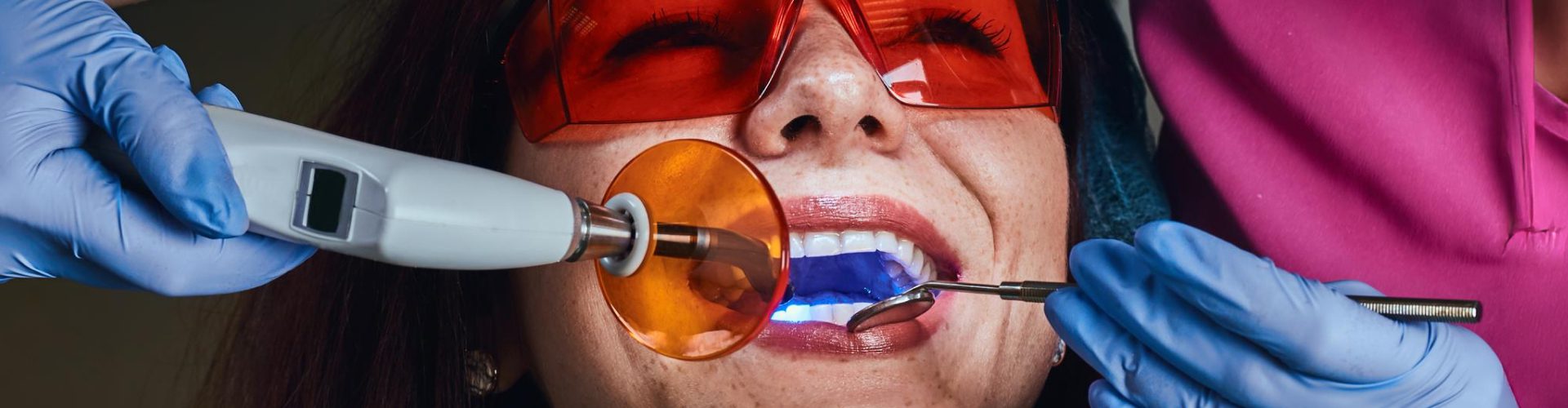

Whitening with active gum disease doesn’t just hurt — it chemically fails. Bleeding gums neutralize whitening gel on contact, and deeper gum treatments require a strict healing window before any bleaching is safe. Here’s what Bakersfield patients need to know before chasing a brighter smile.
Bleeding Gums Don’t Just Hurt — They Destroy Your Whitening Gel
Most people assume whitening through gum inflammation is a pain tolerance issue. It’s actually a chemistry problem.
When gums are inflamed or bleeding, they release an enzyme called catalase — the same enzyme found in blood. Catalase breaks hydrogen peroxide down into water and oxygen almost instantly. That’s the same hydrogen peroxide that’s supposed to be bleaching your teeth. The moment whitening gel contacts bleeding tissue, catalase neutralizes the active ingredient before it can penetrate enamel and lift stains.
The result? Patchy, uneven whitening at best. A complete waste of treatment at worst — alongside genuine chemical burns on already-irritated gum tissue.
According to WebMD, whitening is ideal for people with healthy, unrestored teeth and gums. That’s not just a recommendation — it’s a clinical prerequisite. Patients in the Fox Run area who skip this step often end up needing to repeat treatment anyway, spending more time in the chair than if they’d addressed their gum health first.
Active gingivitis or periodontitis also means the gum barrier protecting your tooth roots is compromised. Peroxide seeping into inflamed pockets doesn’t whiten anything below the gumline — it irritates the connective tissue and can delay healing. Research published in PMC confirms that while peroxide-based whitening is safe when used properly, adverse effects become significantly more likely with inappropriate application or compromised oral tissue.
Bottom line: treat the gum disease first. Professional teeth whitening is a reward for healthy gums, not a shortcut around them.
The Cleaning Timeline That Most Articles Get Wrong
Generic advice says “get a cleaning before whitening.” That’s true — but incomplete. The type of cleaning matters enormously, and the timing rules are completely different depending on which one you received.
Standard prophylaxis (routine cleaning): This is the twice-yearly cleaning for patients with generally healthy gums. It removes surface plaque, calculus, and staining. For patients near Fairway Oaks with healthy gum tissue, cleanings and exams can be followed by whitening safely the same day or within a day or two after a prophy. The gum tissue is intact, the sulcus is shallow, and there’s no open wound for peroxide to exploit.
Scaling and root planing (SRP): This is a deep cleaning performed when periodontal disease has caused significant bone or tissue loss. During SRP, the hygienist cleans below the gumline, disrupting the epithelial attachment between gum and tooth. That tissue needs time to reattach and heal. Whitening immediately after an SRP forces concentrated peroxide into deep, unhealed periodontal pockets — causing excruciating deep-tissue chemical burns and potentially interfering with gum-to-tooth reattachment.
The clinical guideline: wait a minimum of 4 to 6 weeks after SRP before any whitening treatment. This allows the epithelial attachment to fully reform and gum tissue to close off those deep pockets.
Harvard Health notes that bleaching can be uncomfortable for people with gum recession, and that consulting your dentist before any bleaching product is essential. That consultation is exactly where this distinction between cleaning types gets addressed — something a drugstore strip cannot do for you.
The Two-Tone Problem Nobody Warns You About
Here’s a whitening risk that rarely gets discussed: if you have gum recession — whether from past gum disease, aggressive brushing, or recovery from a gum graft — whitening can actually make your smile look worse, not better.
The reason is anatomical. Whitening agents work by penetrating enamel, the hard outer layer covering the crown of your tooth. But exposed tooth roots aren’t covered by enamel. They’re made of cementum and dentin, which are softer, more porous, and structurally different from enamel. Peroxide does not bleach cementum and dentin the same way.
When a patient with recession whitens their teeth, the crown gets dramatically brighter while the exposed root surface stays yellow or dark. The contrast between the two is visually striking — and not in a good way. The whitening procedure highlights the recession rather than hiding it.
Mouthhealthy.org from the ADA is clear that whitening does not work on all teeth, and that different types of discoloration respond very differently. This is exactly why a dentist needs to evaluate your gum line before recommending whitening.
If you have exposed root surfaces, the better clinical path is to whiten first to establish your target shade, then have composite bonding matched to that shade applied over the exposed root areas. This creates a uniform color across the full visible tooth without the two-tone trap. It’s a sequencing strategy — and it’s only possible with professional oversight. Patients who want to explore additional smile improvements may also want to consider dental veneers as part of a comprehensive aesthetic plan.
Why Professional Whitening Is Safer for Your Gums Than Store-Bought Options
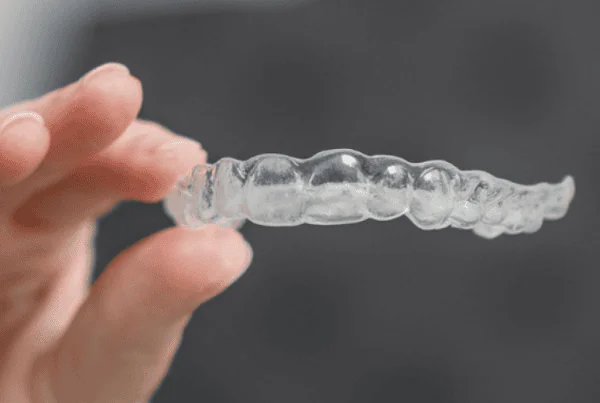
Over-the-counter strips and trays aren’t inherently dangerous, but they’re also not designed for your mouth specifically. Generic trays allow gel to seep onto gum tissue. Strips shift position. Neither product accounts for pre-existing recession, uneven gum margins, or active inflammation.
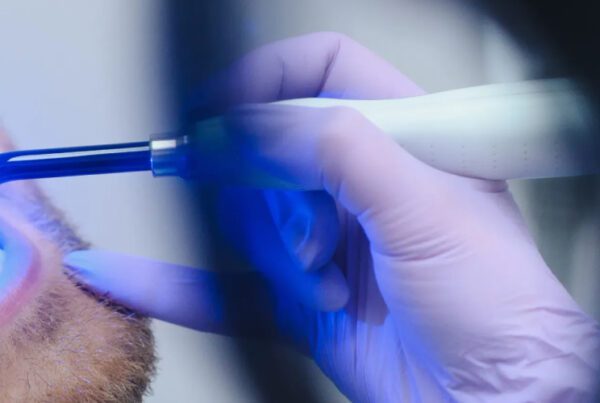
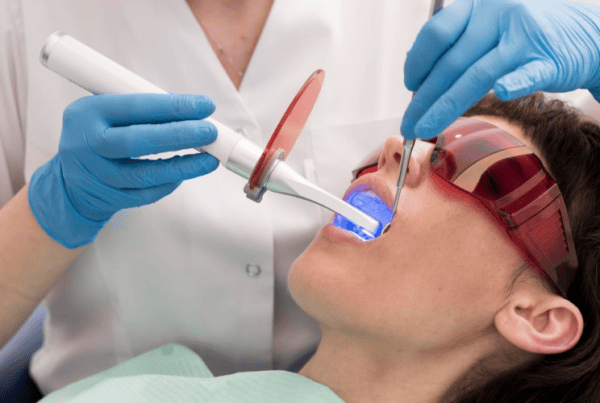
In-office whitening uses custom gum barriers and precisely applied bleaching gel. The concentration is higher, but the exposure is controlled. A dental professional monitors tissue response in real time and can stop the procedure if sensitivity or irritation develops.
Healthline notes that in-office treatments are specifically recommended for patients with gum recession, sensitivity, or other complicating factors — exactly the situations where OTC products are most likely to cause problems.
The ADA’s guidance via adanews.ada.org also recommends a dental cleaning prior to whitening, so that plaque is removed and any oral health issues are identified before bleaching agents are applied. That’s not a upsell — it’s a sequencing requirement for predictable, safe results.
In Bakersfield, patients who come in for a whitening consultation at our practice receive a full gum health assessment before any treatment is recommended. For patients dealing with more serious oral health concerns, our team also handles dental emergencies and can address urgent gum or tooth issues before any cosmetic treatment begins. That step protects your results as much as your gums.
Ready for a Whiter Smile the Right Way?
If you’ve been wondering whether teeth whitening in Bakersfield is right for you — especially if you’ve had gum concerns in the past — the answer starts with an honest conversation, not a strip from the drugstore.
First Choice Dentistry serves patients across Bakersfield, including the Fairway Oaks and Fox Run communities, with comprehensive whitening consultations that evaluate your gum health before recommending any treatment. Whether you’re also interested in aesthetic dentistry options to complement your results, our team is here to guide you every step of the way. Schedule your visit and find out exactly where you stand.
Medical disclaimer: This article is for informational purposes only and does not constitute professional dental or medical advice. Always consult a licensed dental professional before beginning any whitening treatment.